Aug
11
2021
--

Former Snap employees raise $9M for Trust, emerging from beta to level marketing playing field

Trust wants to give smaller businesses the same advantages that large enterprises have when marketing on digital and social media platforms. It came out of beta with $9 million in seed funding from Lerer Hippeau, Lightspeed Venture Partners, Upfront Ventures and Upper90.

The Los Angeles-based company was started in 2019 by a group of five Snap alums working in various roles within Snap’s revenue product strategy business. They were building tools for businesses to fund success with digital marketing, but kept hearing from customers about the advantage big advertisers had over smaller ones — the ability to receive good payment terms, credit lines, as well as data and advice.

Aiming to flip the script on that, the group created Trust, which is a card and business community to help digital businesses navigate the ever-changing pricing models to market online, receive the same incentives larger advertisers get and make the best decision of where their marketing dollars will reach the furthest.
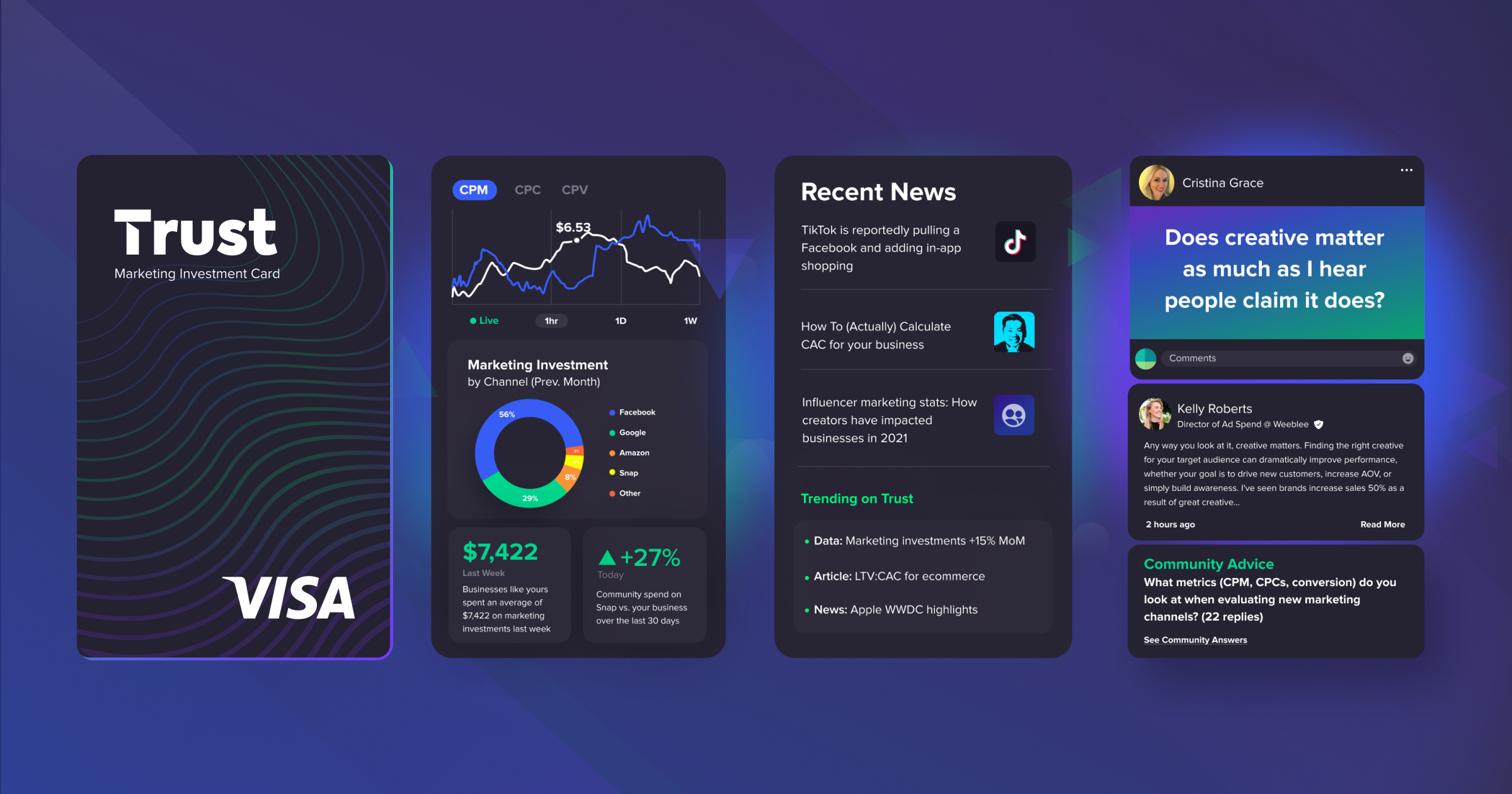
Trust dashboard

Trust does this in a few ways: Its card, built in partnership with Stripe, enables businesses to increase their buying power by up to 20 times and have 45 days to make payments on their marketing investments, CEO James Borow told TechCrunch. Then as part of its community, companies share knowledge of marketing buys and data insights typically reserved for larger advertisers. Users even receive news via their dashboard around their specific marketing strategy, he added.

“The ad platforms are walled gardens, and most people don’t know what is going on inside, so our customers work together to see what is going on,” Borow said.

The growth of e-commerce is pushing more digital marketing investments, providing opportunity for Trust to be a huge business, Borow said. E-commerce sales in the U.S. grew by 39% in the first quarter, while digital advertising spend is forecasted to increase 25% this year to $191 billion. Meanwhile, Google, Facebook, Snapchat and Twitter all recently reported rapid growth in their year-over-year advertising revenues, Borow said.

The new funding will go toward increasing the company’s headcount.

“We have active customers on the platform, so we wanted to ramp up hiring as soon as we went into general release,” he added. “We are leaving beta with 25 businesses and a few hundred on our waitlist.”

That list will soon grow. In addition to the funding round, Trust announced a strategic partnership with social shopping e-commerce platform Verishop. The company’s 3,500 merchants will receive priority access to the Trust card and community, Borow said.

Andrea Hippeau, partner at Lerer Hippeau, said she knew Borow from being an investor in his previous advertising company Shift, which was acquired by Brand Networks in 2015.

When Borow contacted Lerer about Trust, Hippeau said this was the kind of offering that would be applicable to the firm’s portfolio, which has many direct-to-consumer brands, and knew marketing was a huge pain point for them.

“Digital marketing is important to all brands, but it is also a black box that you put marketing dollars into, but don’t know what you get,” she said. “We hear this across our portfolio — they spend a lot of money on ad platforms, yet are treated like mom-and-pop companies in terms of credit. When in reality Casper is outspending other companies by five times. Trust understands how important marketing dollars are and gives them terms that are financially better.”


 

Jul
13
2021
--

Product-led sales startup Endgame raises over $17M

Endgame, enabling software companies to turn customer observations into go-to-market strategies, announced Tuesday it raised a total of $17 million in back-to-back seed and Series A funding rounds.

The $12.25 million Series A was led by Menlo Ventures, while the $5 million seed round was led by Upfront Ventures. Also participating in the round are a group of investors including Todd and Rahul’s Fund, Liquid 2 Ventures and Gainsight CEO Nick Mehta.

Los Angeles-based Endgame was founded in 2020 and provides a self-service look at what’s happening in a software trial so that a sales team can prioritize accounts based on user behavior signals and act on them faster without having to be a data scientist or engineer.

Company CEO Alex Bilmes told TechCrunch that the concepts of product-led sales and product-led growth have taken over the sale of software. Today’s customers sign up for a trial, and if they like it, they invite their friends to try it.

However, at a certain point, some sales pressure is needed to close the deal. That’s where Endgame comes in: It shows who is doing what, and what features are being used — data that is typically opaque to sales and revenue teams.

Traditional customer relationship management systems are designed to be rep-driven, meaning the sales rep is responsible for adding notes. It’s simpler if a rep only has a few accounts, but across tens of millions of users, Endgame analyzes the data and identifies which accounts are most likely to convert, who are the users to engage, what makes a good customer and how to take action with the right people.

Endgame is not competing against other companies so much as in-house developers that are cobbling a bunch of apps together in efforts to create a system that works for them, Bilmes said.

“Most of this is solved with do-it-yourself,” he added. “I have built Endgame a number of times at other companies using databases and other piece-meals to put together something so I could mash data from lots of places and build subscriptive views for revenue teams. We compete with those data scientists and internal teams stitching together horizontal tools.”

Endgame is pre-revenue and is already catering to a group of beta customers like Figma, Loom, Airtable, Clubhouse, Mode, Retool and Algolia that are looking for a dedicated software platform to capture product-led value.

Bilmes said the customer relationship management market, both huge and fast-growing at 35% annually, is expected to reach $114 billion by 2027. To meet demand, he intends to use the new funds to continue hiring aggressively. He has already tripled the size of the team to nine in the past few months, and expects to double that in the coming year. In addition, funds will go toward R&D and to further define the product-led sales landscape.

Growth over the next year will be customer-focused as Endgame works to get into the hands of the right customers and making it as accessible as possible for people to begin doing product-led motions.

“Our efforts are product-focused,” Bilmes said. “We’ve seen more demand than we can possibly hope to fill given the problem is so real for so many.”

As part of the investment, Upfront Ventures Partner Kara Nortman and Menlo Ventures Partner Naomi Ionita will join Endgame’s board of directors. Sandhya Hegde, partner at Unusual Ventures, which also participated in both rounds, joins as a board observer to create an all-women investor board.

When Endgame was raising its seed fund, it wanted to work with Nortman, who has expertise in applying consumer concepts to enterprise, Bilmes said. When it came to the Series A, Bilmes said he felt Ionita was the perfect partner due to her similar background to Bilmes and expertise in teaching salespeople how to engage.

Ionita told TechCrunch she learned about Endgame from Nortman, with whom she has invested in other startups. The company understands the pain point and is for companies that offer a self-service version for the “why and how.”

“This intelligence doesn’t exist, and I know that because I lived it — building in-house or seeing companies flying blind,” she added. “Alex just gets this, and I see Endgame being the system of record and intelligence for bridging self-serve. They will be the final bridge that needs to exist between product teams and product-facing sales reps for which accounts to address and why.”


Jul
06
2021
--

Sarah Guo, Kobie Fuller & Casey Aylward headline investor panel at TC Sessions: SaaS

While SaaS has become the default way to deliver software in 2021, it still takes a keen eye to find the companies that will grow into successful businesses, maybe even more so with so much competition. That’s why we’re bringing together three investors to discuss what they look for when they invest in SaaS startups.

For starters, we’ll have Sarah Guo, who has been a partner at Greylock since 2013 where she concentrates on AI, cybersecurity, infrastructure and the future of work — all in a SaaS context of course. Among her investments are Obsidian, Clubhouse and Awake. Her exits include Demisto, which Palo Alto acquired for $560 million in 2019 and Skyhigh Networks, which McAfee bought for $400 million in 2018.

Prior to joining Greylock, she worked for Goldman Sachs investing in growth-stage companies and advising SaaS companies like Dropbox and Workday.

Next we’ll have Kobie Fuller, a partner at Upfront Ventures, who looks at SaaS as well as AR and VR. Fuller has been at Upfront since 2016 when he joined after a three-year stint at Accel. He oversaw a pair of billion dollar exits while at Accel including ExactTarget to Salesforce for $2.5 billion and Oculus to Facebook for $2 billion. Upfront investments include Bevy, community building software, which recently got a $40 million investment with 20% of that coming from 25 Black investors.

Finally, we’ll have Casey Aylward, a principal at Costanoa Ventures where she concentrates on early-stage enterprise startups. Among her investments have been Aserto, Bigeye and Cyral. She tends to concentrate on developer tools. “My entire career so far has been focused on developers: whether it was building tools for developers, building software myself or now investing in enabling technologies for the next generation of technical users,” she wrote on her bio page.

This prestigious group will share their thoughts at TC Sessions: SaaS, a one-day virtual event that will examine the state of SaaS to help startup founders, developers and investors understand the state of play and what’s next. We hope you’ll join us.

The single-day event will take place 100% virtually on October 27 and will feature actionable advice, Q&A with some of SaaS’s biggest names and plenty of networking opportunities. Importantly, $75 Early Bird passes are now on sale. Book your passes today to save $100 before prices go up.


Mar
24
2021
--

Bevy raises $40M Series C with 20% coming from Black investors

You might expect that a startup that makes community building software would be thriving during a pandemic when it’s so difficult for us to be together. And Bevy, a company whose product powers community sites like Salesforce Trailblazers and Google Developers announced it has raised a $40 million Series C this morning, at least partly due to the growth related to that dynamic.

The round was led by Accel with participation from Upfront Ventures, Qualtrics co-founder Ryan Smith and LinkedIn, but what makes this investment remarkable is that it included 25 Black investors representing 20% of the investment.

One of those investors, James Lowery, who is a management consultant and entrepreneur, and was the first Black employee hired at McKinsey in 1968, sees the opportunity for this approach to be a model to attract investment from other under-represented groups.

“I know for a fact because of my friendship and my network that there are a lot of people, if they had the opportunity to invest in opportunities like this, they will do it, and they have the money to do it. And I think we can be the model for the nation,” Lowery said.

Unfortunately, there has been a dearth of Black VC investment in startups like Bevy. In fact, only around 3% of venture capitalists are Black and 81% of VC firms don’t have a single Black investor.

Kobie Fuller, who is general partner at investor Upfront Ventures, a Bevy board member and runs his own community called Valence, says that investments like this can lead to a flywheel effect that can lead to increasing Black investment in startups.

“So for me, it’s about how do we get more Black investors on cap tables of companies early in their lifecycle before they go public, where wealth can be created. How do we get key members of executive teams being Black executives who have the ability to create wealth through options and equity. And how do we also make sure that we have proper representation on the boards of these companies, so that we can make sure that the CEOs and the C suite is held accountable towards the diversity goals,” Fuller said.

He sees a software platform like Bevy that facilitates community as a logical starting point for this approach, and the company needs to look like the broader communities it serves. “Making sure that our workforce is appropriately represented from a perspective of having appropriate level of Black employees to the board to the actual investors is just good business sense,” he said.

But the diversity angle doesn’t stop with the investor group. Bevy CEO and co-founder Derek Anderson says that last May when George Floyd was killed, his firm didn’t have a single person of color among the company’s 27 employees and not a single Black investor in his cap table. He wanted to change that, and he found that in diversifying, it not only was the right thing to do from a human perspective, it was also from a business one.

“We realized that if we really started including people from the Black and brown communities inside of Bevy that the collective bar of a talent was going to go up. We were going to look from a broader pool of candidates, and what we found as we’ve done this is that as the culture has started to change, the customer satisfaction is going up, our profits and our revenues — the trajectory is going up — and I see this thing is completely correlated,” Anderson said.

Last summer the company set a two year goal to get to 20% of employees being Black. While the number of employees is small, Bevy went from zero to 5% in June, and 10% by September. Today it is just under 15% and expects to hit the 20% goal by summer, a year ahead of the goal it set last year.

Bevy grew out of a community called Startup Grind that Anderson started several years ago. Unable to find software to run and manage the community, he decided to build it himself. In 2017, he spun that product into a separate company that became Bevy, and he has raised $60 million, according to the company.

In addition to Salesforce and Google, other large enterprises are using Bevy to power their communities and events, including Adobe, Atlassian, Twilio, Slack and Zendesk.

Today, the startup is valued at $325 million, which is 4x the amount it was valued at when it raised its $15 million Series B in May 2019. It expects to reach $30 million in ARR by the end of this year.

Sep
01
2020
--

InfoSum raises $15.1M for its privacy-first, federated approach to big data analytics

Data protection and data privacy have gone from niche concerns to mainstream issues in the last several years, thanks to new regulations and a cascade of costly breaches that have laid bare the problems that arise when information and data security are treated haphazardly.

Yet that swing has also thrown up a whole series of issues for organisations and business functions that depend on sharing and exchanging data in order to work. Today, a startup that has built a new way of exchanging data while still keeping privacy in mind — starting first by applying the concept to the “marketing industrial complex” — is announcing a round of funding as it continues to pick up momentum.

InfoSum, a London startup that has built a way for organizations to share their data with each other without passing it on to each other — by way of a federated, decentralized architecture that uses mathematical representations to organise, “read” and query the data — is today announcing that it has raised $15.1 million.

Data may be the new oil, but according to founder and CEO Nick Halstead, that just means “it’s sticky and gets all over the place.” That is to say, InfoSum is looking for a new way to use data that is less messy, and less prone to leakage, and ultimately devaluation.

The Series A is being co-led by Upfront Ventures and IA Ventures. A number of strategics using InfoSum — Ascential, Akamai, Experian, British broadcaster ITV and AT&T’s Xandr — are also participating in the round. The startup has raised $23 million to date.

Nicholas Halstead, the founder and CEO who previously had founded and led another big data company, DataSift (the startup that gained early fame as a middleman for Twitter’s firehose of data, until Twitter called time on that relationship to push its own business strategy), said in an interview that the plan is to use the funding to continue fueling its growth, with a specific focus on the U.S. market.

To that end, Brian Lesser — the founder and former CEO of Xandr (AT&T’s adtech business that is now a part of AT&T’s WarnerMedia), and previous to that the North American CEO of GroupM — is joining the company as executive chairman. Lesser had originally led Xandr’s investment into InfoSum and had previously been on the board of the startup.

InfoSum got its start several years ago as CognitiveLogic, founded at a time when Halstead was first starting to get his head around the problems that were becoming increasingly urgent in how data was being used by companies, and how newer information architecture models using data warehousing and cloud computing could help solve that.

“I saw the opportunity for data collaboration in a more private way, helping enable companies to work together when it came to customer data,” he said. This eventually led to the company releasing its first product two years ago.

In the interim, and since then, that trend, he noted, has only gained momentum, spurred by the rise of companies like Snowflake that have disrupted the world of data warehousing, cookies have started to increasingly go out of style (and some believe will disappear altogether over time) and the concept of federated architecture has become much more ubiquitous, applied to identity management and other areas.

All of this means that InfoSum’s solution today may be aimed at martech, but it is something that affects a number of industries. Indeed, the decision to focus on marketing technology, he said, was partly because that is the industry that Halstead worked most closely with at DataSift, although the plan is to expand to other verticals as well.

“We’ve done a lot of work to change the marketing industrial complex,” said Lesser, “but its bigger use cases are in areas like finance and healthcare.”

Mar
14
2020
--

This startup got a meeting with Mark Suster by getting clever with Google ads

Startups have done some wild things to get the attention of VCs. In fact, Instacart founder Apoorva Mehta sent YC partner (at the time) Garry Tan a six-pack of beer through the service after missing the deadline for Y Combinator by two months.

Yesterday, the ingenuity of startups struck again.

Tadabase.io, an enterprise startup that offers no-code tools to help businesses automate their processes, has had an ad running that was… well, hyper targeted.

ProductHunt founder and WeekendFund investor Ryan Hoover discovered the ad and shared it on Twitter.

Hoover told TechCrunch he was Googling Mark Suster to facilitate an introduction between Suster and one of Hoover’s portfolio companies. Instead, he found a Google ad directed squarely at Suster from Tadabase.io.

“Mark Suster, you haven’t invested in nocode” read the paid listing. “Therefore, we put this ad here to get your attention. If you’re not Mark, please don’t click here and save us some money.”

I reached out to Suster, managing partner at UpFront Ventures, to see what he thought of the ad. He told me he “loved it” and has already contacted the CEO to set up a call for next week.

Whether this clever Google ad will result in an actual investment is yet to be determined. Also unclear: will Ryan Hoover get in on the deal?

I reached out to Tadabase founder and CEO Moe Levine via email to ask about the ad, how they went about targeting, and how he feels about his upcoming phone call next week. He hasn’t responded yet. I’ll update if/when he does.

Nov
12
2019
--

Lawyers hate timekeeping — Ping raises $13M to fix it with AI

Counting billable time in six-minute increments is the most annoying part of being a lawyer. It’s a distracting waste. It leads law firms to conservatively under-bill. And it leaves lawyers stuck manually filling out timesheets after a long day when they want to go home to their families.

Life is already short, as Ping CEO and co-founder Ryan Alshak knows too well. The former lawyer spent years caring for his mother as she battled a brain tumor before her passing. “One minute laughing with her was worth a million doing anything else,” he tells me. “I became obsessed with the idea that we spend too much of our lives on things we have no need to do — especially at work.”

That’s motivated him as he’s built his startup Ping, which uses artificial intelligence to automatically track lawyers’ work and fill out timesheets for them. There’s a massive opportunity to eliminate a core cause of burnout, lift law firm revenue by around 10% and give them fresh insights into labor allocation.

Ping co-founder and CEO Ryan Alshak (Image Credit: Margot Duane)

That’s why today Ping is announcing a $13.2 million Series A led by Upfront Ventures, along with BoxGroup, First Round, Initialized and Ulu Ventures. Adding to Ping’s quiet $3.7 million seed led by First Round last year, the startup will spend the cash to scale up enterprise distribution and become the new timekeeping standard.

“I was a corporate litigator at Manatt Phelps down in LA and joke that I was voted the world’s worst timekeeper,” Alshak tells me. “I could either get better at doing something I dreaded or I could try and build technology that did it for me.”

The promise of eliminating the hassle could make any lawyer who hears about Ping an advocate for the firm buying the startup’s software, like how Dropbox grew as workers demanded easier file sharing. “I’ve experienced first-hand the grind of filling out timesheets,” writes Initialized partner and former attorney Alda Leu Dennis. “Ping takes away the drudgery of manual timekeeping and gives lawyers back all those precious hours.”

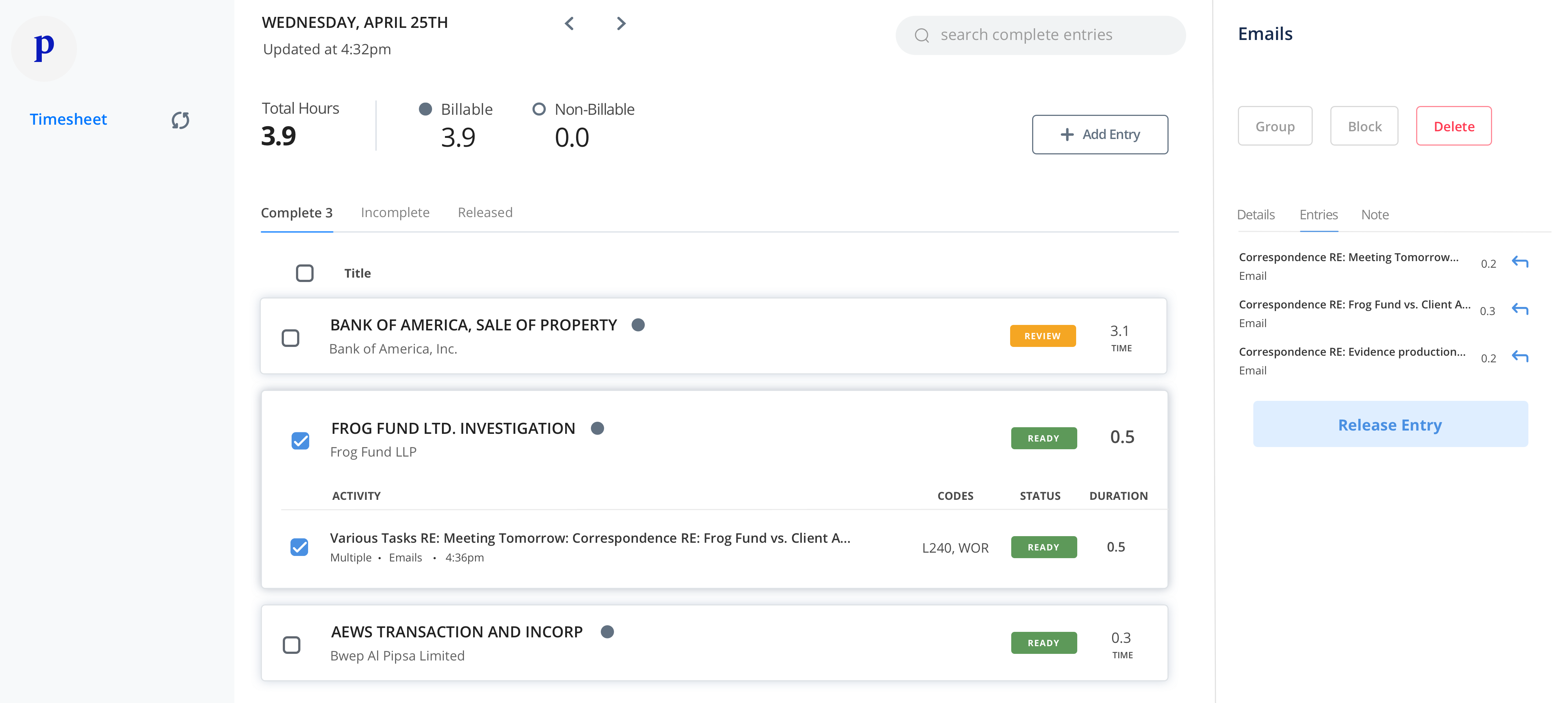
Traditionally, lawyers have to keep track of their time by themselves down to the tenth of an hour — reviewing documents for the Johnson case, preparing a motion to dismiss for the Lee case, a client phone call for the Sriram case. There are timesheets built into legal software suites like MyCase, legal billing software like TimeSolv and one-off tools like Time Miner and iTimeKeep. They typically offer timers that lawyers can manually start and stop on different devices, with some providing tracking of scheduled appointments, call and text logging, and integration with billing systems.

Ping goes a big step further. It uses AI and machine learning to figure out whether an activity is billable, for which client, a description of the activity and its codification beyond just how long it lasted. Instead of merely filling in the minutes, it completes all the logs automatically, with entries like “Writing up a deposition – Jenkins Case – 18 minutes.” Then it presents the timesheet to the user for review before they send it to billing.

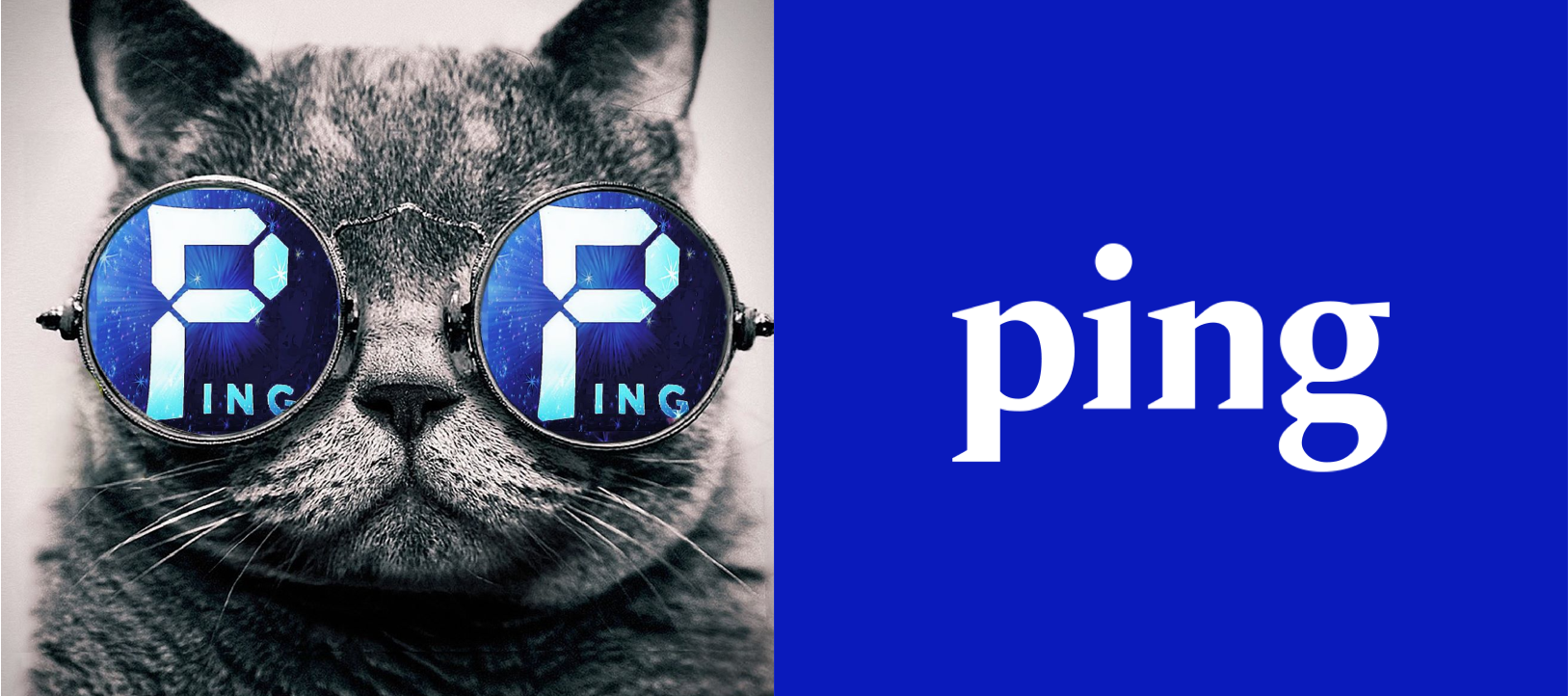
The big challenge now for Alshak and the team he’s assembled is to grow up. They need to go from cat-in-sunglasses logo Ping to mature wordmark Ping.  “We have to graduate from being a startup to being an enterprise software company,” the CEO tells me. That means learning to sell to C-suites and IT teams, rather than just build a solid product. In the relationship-driven world of law, that’s a very different skill set. Ping will have to convince clients it’s worth switching to not just for the time savings and revenue boost, but for deep data on how they could run a more efficient firm.

Along the way, Ping has to avoid any embarrassing data breaches or concerns about how its scanning technology could violate attorney-client privilege. If it can win this lucrative first business in legal, it could barge into the consulting and accounting verticals next to grow truly huge.

With eager customers, a massive market, a weak status quo and a driven founder, Ping just needs to avoid getting in over its heads with all its new cash. Spent well, the startup could leap ahead of the less tech-savvy competition.

Alshak seems determined to get it right. “We have an opportunity to build a company that gives people back their most valuable resource — time — to spend more time with their loved ones because they spent less time working,” he tells me. “My mom will live forever because she taught me the value of time. I am deeply motivated to build something that lasts . . . and do so in her name.”

Feb
09
2016
--

CognitiveLogic Raises $3M To Help Enterprises Pool Big Data While Keeping Privacy Intact

circular maze DataSift made a name for itself as a company that took large unstructured datasets — such as anonymised firehoses from social media services like Facebook (and previously, Twitter) and ordered them in a way for enterprises and brands to get a better idea of consumer preferences and other insights. Now Nick Halstead, the person who founded and led DataSift but left the role in… Read More

Powered by WordPress | Theme: Aeros 2.0 by TheBuckmaker.com