Contract management service DocuSign today announced that it is acquiring Seal Software for $188 million in cash. The acquisition is expected to close later this year. DocuSign, it’s worth noting, previously invested $15 million in Seal Software in 2019.
Seal Software was founded in 2010, and, while it may not be a mainstream brand, its customers include the likes of PayPal, Dell, Nokia and DocuSign itself. These companies use Seal for its contract management tools, but also for its analytics, discovery and data extraction services. And it’s these AI smarts the company developed over time to help businesses analyze their contracts that made DocuSign acquire the company. This can help them significantly reduce their time for legal reviews, for example.
“Seal was built to make finding, analyzing, and extracting data from contracts simpler and faster,” Seal Software CEO John O’Melia said in today’s announcement. “We have a natural synergy with DocuSign, and our team is excited to leverage our AI expertise to help make the Agreement Cloud even smarter. Also, given the company’s scale and expansive vision, becoming part of DocuSign will provide great opportunities for our customers and partners.”
DocuSign says it will continue to sell Seal’s analytics tools. What’s surely more important to DocuSign, though, is that it will also leverage the company’s AI tools to bolster its DocuSign CLM offering. CLM is DocuSign’s service for automating the full contract life cycle, with a graphical interface for creating workflows and collaboration tools for reviewing and tracking changes, among other things. And integration with Seal’s tools, DocuSign argues, will allow it to provide its customers with a “faster, more efficient agreement process,” while Seal’s customers will benefit from deeper integrations with the DocuSign Agreement Cloud.
 Nokia’s got a nice, adorable name picked out for its new voice assistant. MIKA stands for “Multi-purpose Intuitive Knowledge Assistant,” letting engineers and telecom operators access information through voice commands. The system is powered by the company’s cognitive services platform, using “augmented intelligence with automated learning to provide access to…
 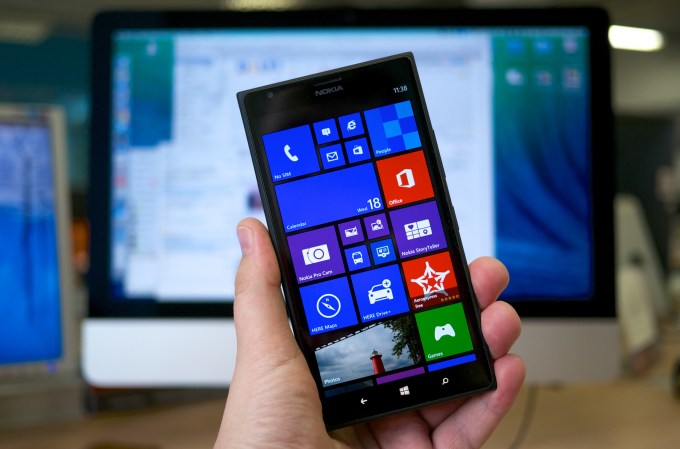 When Microsoft announced its wrenching $7.6 billion write-down last week, it was easy to presume that the company was giving up on mobile. At the very least, the financial avalanche sent a strong signal that Windows phone in its current guise has failed in a major way.
  Nokia made its name in mobile phones, breaking new ground and holding the title of world’s biggest handset maker for a number of years before the onslaught of competition from OEMs like Samsung and Apple reversed its fortunes. Now that Nokia has sold that business on to Microsoft, the pared-down, enterprise-heavy remaining Nokia is looking for the next big thing in communications.…
  According to a local-language report in Finnish newspaper Helsingin Sanomat, Microsoft is gearing up for around 1,000 layoffs in Finland. Microsoft acquired around 4,700 employees in the country when it purchased substantial assets from Nokia, a deal that closed in April. We reached out but Microsoft declined to comment. At work here is the fact that Microsoft is widely expected to be…
 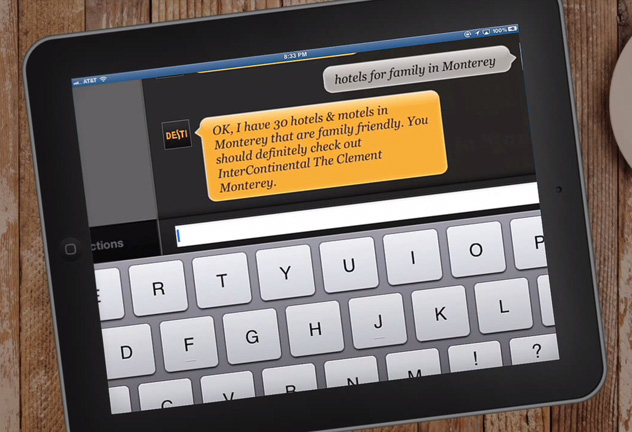 Nokia, now lightened of its handset load thanks to Microsoft, has made an acquisition to expand its HERE mapping business, one of the assets that has remained with the Finnish company. It has bought Desti, a mapping startup and app maker that uses artificial intelligence and natural language processing to help people find what they are looking for. Desti is a spin-out from SRI International,…